Categories
Artificial Intelligence Networking

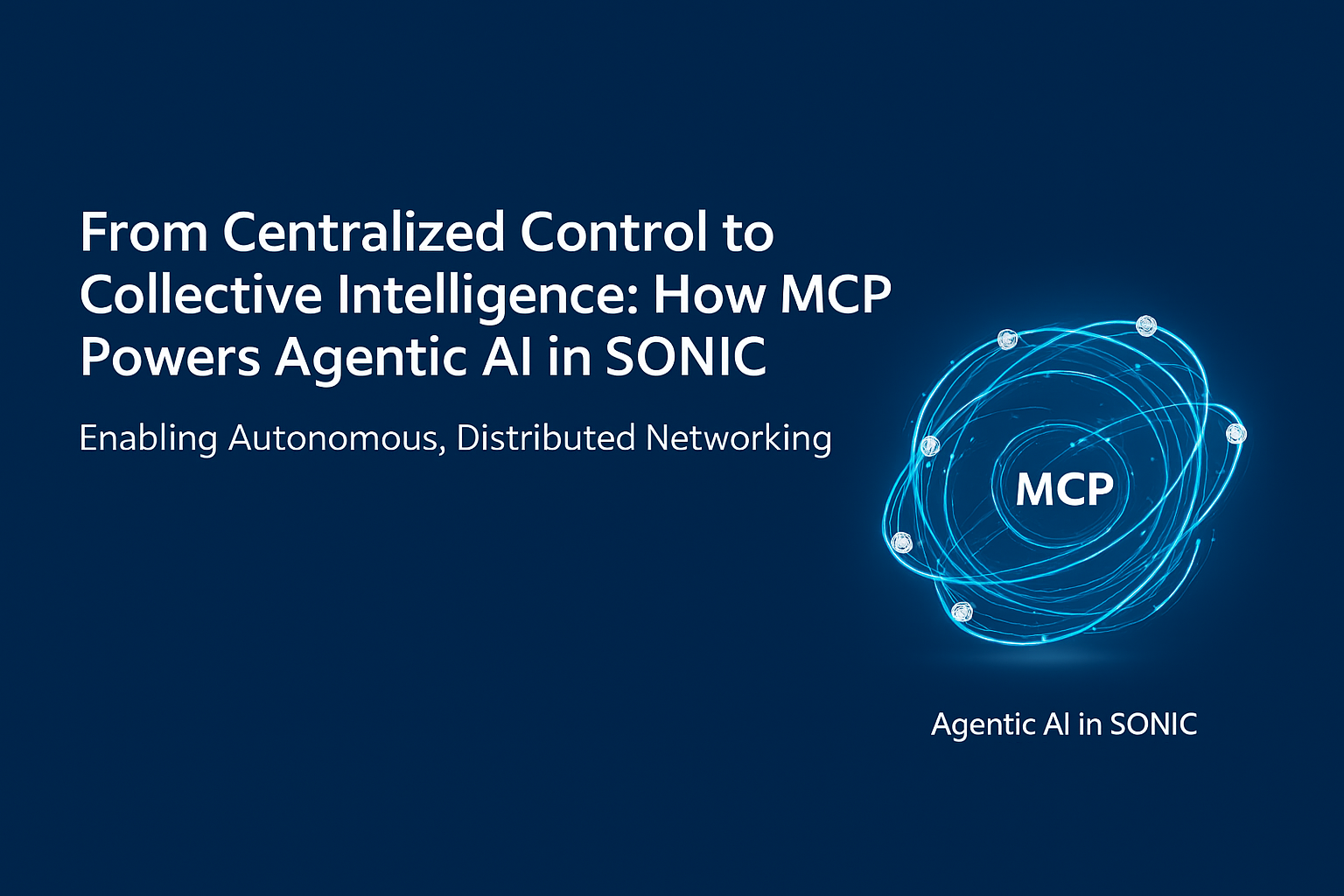
The Next Evolution in SONiC Intelligence

At PalC Networks, our work with SONiC has always been about more than automation.
Automation is efficient but itโ€™s still reactive.

What we wanted was awareness: A network that could interpret, coordinate, and adapt.

That idea took form through Agentic AI: a framework where SONiCโ€™s critical functions (configuration, telemetry, topology, security) are handled by specialized, intelligent agents.

But as we scaled, one challenge became clear: Intelligence, if isolated, becomes another form of silo.

Each agent could perform brilliantly on its own, but real autonomy requires more, A shared consciousness.Thatโ€™s where the MCP (Multi-Agent Coordination Plane) comes in.
Itโ€™s the layer that turns multiple intelligent agents into a cooperative, adaptive ecosystem.

From Orchestration to Collaboration

Traditional orchestration relies on centralized control using one brain to manage the entire network.

Modern networks are organic with thousands of devices, millions of telemetry signals, and unpredictable traffic patterns.

Scaling intelligence doesnโ€™t mean building a bigger brain. It means building many smaller ones where each one is capable of learning, reasoning, and collaborating.

Thatโ€™s the foundation of MCP:

Every SONiC agent becomes an independent node that can:

  • Understand its local state
  • Exchange context with peers
  • Coordinate decisions through the MCP layer

Together, they form a federation of specialized minds which means faster, more resilient, and inherently aware of the whole.

MCP Explained: The Missing Link Between Automation and Autonomy

The Multi-Agent Coordination Plane is a distributed intelligence fabric that connects multiple SONiC agents into one unified reasoning system.

In our Agentic AI architecture, MCP acts like a nervous system for the network:

  • Each agent (Config, Telemetry, Topology, Security) behaves like a neuron.
  • MCP is the synaptic layer that carries signals and aligns actions.
  • Together, they create a collective intelligence becoming self-aware, self-optimizing, and contextually driven.

How MCP Works

1.Distributed Reasoning
Each agent monitors, configures, or optimizes within its domain, while MCP ensures a shared state across them.

2.Context Sharing
When telemetry flags congestion, MCP routes that insight to configuration and topology agents, prompting proactive adjustments.

3.Decision Synchronization
MCP prevents conflicting actions, ensuring coordinated, safe changes across agents.

4.Learning & Feedback
Over time, MCP identifies patterns in cause and effect, improving the networkโ€™s ability to predict and prevent disruptions.

Business Impact: Why MCP Matters for Enterprises

MCP is more of a business enabler than being an architectural improvement.
It turns reactive infrastructure into a self-optimizing system that saves time, cost, and risk.

Enterprise Challenge MCP Solution
Manual, reactive operations Predictive, AI-driven coordination before failures occur
Configuration errors Pre-validation, rollback, and cross-agent verification
Fragmented monitoring Unified loop between telemetry, config, and topology
Scaling complexity Distributed, localized decision-making for faster remediation
Compliance and audits Built-in traceability for every autonomous action

By distributing reasoning across nodes, MCP transforms the data center from an operational burden into resilient, compliant, and aware ecosystem.

Turning SONiC Agents into Collaborators

Hereโ€™s how collaboration unfolds inside PalCโ€™s Agentic AI framework:

  • Intent Interpretation: The orchestrator translates operator intent (e.g., โ€œDeploy a 4-leaf, 1-spine fabric with telemetry enabledโ€).
  • Delegation via MCP: Tasks are distributed into Configuration sets up interfaces, Topology maps links, Telemetry preps sensors.
  • State Synchronization: Agents continuously share updates, ensuring decisions remain consistent and validated.
  • Adaptive Execution: MCP learns from each event, fine-tuning coordination for future scenarios.

SONiC, through MCP, shifts from being managed to self-managing.

When Each Agent Thinks and Learns

Each agent grows smarter through experience:

  • Config Agent: Learns from historical changes to suggest safer rollouts.
  • Telemetry Agent: Detects patterns to predict congestion or performance drift.
  • Topology Agent: Recalculates paths dynamically under load or failure.
  • Security Agent: Applies policies based on live context, not static rules.

Through MCP, these agents share learning, building a network that’s intelligently aware.

Traditional Automation Agentic AI + MCP
Centralized control Distributed coordination
Static rule execution Context-aware reasoning
Manual incident handling Autonomous self-healing
Configuration scripts Intent-driven adaptability

MCP turns SONiC fabrics into cooperative, evolving systems

PalCโ€™s Vision: Engineering Distributed Autonomy

Our MCP framework fuses AI reasoning, SONiCโ€™s openness, and operational discipline into a distributed, resilient control model.

The goal is to give networks the ability to handle complexity, so humans can focus on innovation.

The outcome:

  • Networks that heal themselves.
  • Operations that think in context.
  • Infrastructure that acts with intent.

Key Takeaways

MCP (Multi-Agent Coordination Plane) enables real-time coordination among SONiC agents.
Agentic AI transforms SONiC from automated to intelligent.
PalC Networks delivers the engineering and ecosystem to make open autonomy practical.
The result: open, intelligent, business-aware data centers built for the future.
Contact us today to learn how PalC Networks can support your journey towards future-ready infrastructure.

Categories
Artificial Intelligence Networking

The Shift Toward Reasoning Networksย 

Every evolution in networking has pursued one goal which is reducing human friction.
From command-line configurations to intent-driven automation, each step simplified execution but not understanding.
As networks now span clouds, edges, and AI clusters, complexity is no longer operational it has turned to be cognitive.
Artificial Intelligence (AI) is stepping into that gap. Not just as a data analytics tool, but as a reasoning layer for networks that can learn, infer, and decide.
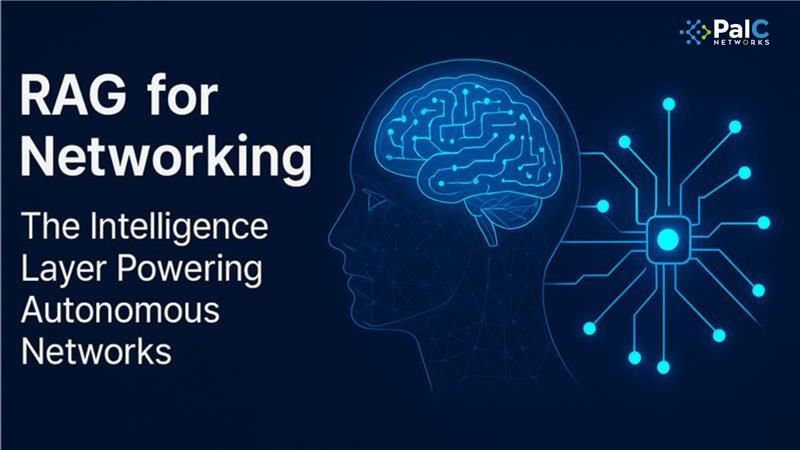
And this shift Retrieval-Augmented Generation (RAG) is a framework that allows AI to think with the networkโ€™s own knowledge.
RAG marks the point where network AI stops merely predicting and starts understanding.

The Evolution of Network Intelligence

Era Core Approach Limitation Next Step
Manual Era Human-driven configs Error-prone, inconsistent Scripted automation
Automation Era SDN, CI/CD, SONiC pipelines Reactive, limited context Contextual AI reasoning
AI Era Retrieval + Generation Needs domain understanding Self-operating cognition

The next leap isnโ€™t automation โ€” itโ€™s comprehension.
Networks that donโ€™t just execute playbooks, but understand why theyโ€™re executing them.

How RAG Fits in Networking

Networks are knowledge systems. They generate massive amounts of unstructured intelligence like telemetry, syslogs, event traps, policy states and most of which remains underutilized.

RAG converts this operational exhaust into reasoning fuel. It enables AI models to:

  • Retrieve live context: Whatโ€™s happening across fabrics, clusters, and tenants.
  • Ground reasoning: Align insights with real-time configurations.
  • Generate precision: Produce factual, explainable outcomes.

In networking terms, RAG is the bridge between observability and cognition โ€” it converts visibility into understanding.

Inside the RAG Loop

RAGโ€™s value lies not only in the workflow, but also in the reasoning feedback that emerges from it.

  1. Collect & Curate: SONiC telemetry, NetPro metrics, logs, configs.
  2. Index Knowledge: Create a searchable intelligence layer of historical and live data.
  3. Retrieve Context: Query relevant slices (โ€œWhat caused leaf-03 reboot last night?โ€).
  4. Generate Reasoning: AI synthesizes causal narratives or configuration recommendations.
  5. Learn & Adapt: Verified responses become part of the retrieverโ€™s future context.

This loop makes networks progressively smarter, not just faster.

Where RAG Redefines NetOps

  • Root Cause Reasoning: Move beyond correlation โ€” infer causation with evidence.
  • Policy Intelligence: Detect and explain compliance drifts across vendors.
  • Cognitive Assistants: Natural-language diagnostics for L1 engineers.
  • Contextual Configs: Generate validated SONiC/BGP/EVPN templates grounded in current state.
  • Adaptive Learning: Retain lessons from every RCA, ticket, or anomaly.

In effect, RAG creates a knowledge memory for the network which acts as a living library that improves operational trust and speed.

PalC Networksโ€™ Perspective: From Telemetry to Reasoning

At PalC Networks, our journey through SONiC-based fabrics, AI observability, and cloud-native orchestration has naturally converged toward RAG-driven network cognition.

Our focus areas include:

  • Integrating NetPro Suite as a real-time retrieval layer, grounding AI in verified telemetry.
  • Domain-tuned AI models that understand network semantics โ€” from L2 loops to RoCEv2 optimizations.
  • Cross-vendor contextual reasoning to unify visibility across SONiC, Cisco, Juniper, and Arista environments.

As contributors to the SONiC ecosystem and the Linux Foundation, weโ€™re advancing an open, cognitive networking paradigm โ€” where intelligence is shared, transparent, and self-improving.

Turning Data into Cognitive Advantage

Enterprises adopting RAG-based network intelligence typically realize:

  • 60% faster RCA through retrieval-grounded context.
  • Reduced operational overhead via explainable AI triage.
  • Improved onboarding as natural language replaces CLI silos.
  • Lower TCO by extending reasoning across multi-vendor networks.

Looking Ahead: From Intelligent to Autonomous Networks

The next generation of networks not only just detect or report; theyโ€™ll reason, decide, and adapt.
AI agents will retrieve evidence, simulate outcomes, and execute remediations with policy assurance.

RAG is the cognitive fabric that enables the turning static data into continuous intelligence.
Itโ€™s how networks evolve from visibility to comprehension, and from automation to autonomy.

In Closing

Retrieval-Augmented Generation marks a turning point in networking ย where AI becomes both a memory and a mind.

At PalC Networks, we believe the future of network operations lies in intelligence built on understanding & networks that can explain themselves as well as they perform.

Contact us today to learn how PalC Networks can support your journey towards future-ready infrastructure.

Categories
OpenStack Networking

This document provides an overview of integrating Telegraf, InfluxDB, and Grafana to monitor SONiC (Software for Open Networking in the Cloud) devices using gNMI (gRPC Network Management Interface). It highlights the advantages of this setup and compares it with other monitoring solutions.

Components Overviewย 

1. Telegraf

  • A lightweight, open-source server agent for collecting and sending metrics.
  • Supports multiple input plugins, including gNMI, to collect telemetry data from SONiC devices.
  • Can be configured to push data to InfluxDB for storage and visualization.

2. InfluxDBย 

  • A high-performance time-series database designed to handle large volumes of real-time data.
  • Efficiently stores telemetry data collected from network devices.
  • Supports querying and analysis using InfluxQL or Flux.

3. Grafanaย ย 

  • An open-source visualization and monitoring tool.
  • Provides dashboards for real-time and historical data analysis.
  • Supports alerting and integrates well with InfluxDB.

4. gNMI (gRPC Network Management Interface)ย ย ย 

  • A modern network management protocol based on gRPC.
  • Enables efficient and secure telemetry data collection.
  • Used by SONiC to provide structured and real-time network telemetry

Advantages of This Setup

  • Real-Time Monitoring: gNMI provides real-time telemetry data, ensuring up-to-date insights into network performance.
  • Scalability:Telegrafโ€™s lightweight architecture and InfluxDBโ€™s efficient time-series storage enable scalable monitoring.
  • Flexibility:Supports multiple plugins and data sources, making it adaptable for various monitoring needs.
  • Efficient Data Storage:InfluxDB optimizes storage for high-frequency data, reducing overhead compared to traditional relational databases.
  • Customizable Dashboards:Grafana offers extensive visualization options, making network analysis intuitive and user-friendly.
  • Automation & Alerting: Grafanaโ€™s built-in alerting allows proactive network issue detection and response.ย 

Advantages of gNMI Over Other Protocols

Feature gNMI SNMP NETCONF/YANG RESTCONF
Transport gRPC-based (binary) UDP-based (text) SSH-based (XML) HTTP-based (XML/JSON)
Performance High (streaming support) Low (polling-based) Moderate (RPC-based) Moderate (REST-based)
Security TLS encryption Minimal security Secure with SSH Secure with TLS
Scalability High Moderate Moderate Moderate
Data Model Structured (Protobuf/YANG) Unstructured (OID) Structured (YANG) Structured (YANG)
Telemetry Streaming & Polling Polling only RPC-based retrieval RPC-based retrieval
Ease of Use Modern & Developer-friendly Legacy, complex Requires XML handling Requires REST API knowledge

Comparison with Other Solutions

Feature Telegraf + InfluxDB + Grafana SNMP-based Monitoring ELK Stack (Elasticsearch, Logstash, Kibana)
Real-time Data Yes (gNMI streaming) No (polling-based) Limited (log-based)
Data Efficiency High (time-series storage) Moderate High (searchable logs)
Visualization Extensive (Grafana) Basic Advanced (Kibana)
Alerting Yes Limited Yes
Scalability High Moderate High
Protocol Support gNMI, SNMP, others SNMP, NetFlow Logs, Metrics, APM

gNMI for Streaming Telemetry from Sonic Device

gNMI streaming telemetry offers an efficient alternative by continuously transmitting data from network devices with incremental updates. Instead of relying on SNMPโ€™s polling mechanism, which collects data regardless of changes, gNMI allows operators to subscribe to specific data points using well-defined sensor identifiers. This approach provides near real-time, model-driven, and analytics-ready insights, enabling more effective network automation, traffic optimization, and proactive troubleshooting.

Telegraf Configuration

[[inputs.gnmi]]
#Address and port of the gNMI GRPC server (Update with sonic device IP)

addresses = [“:”,”:”]

#define credentials

username = “”

password = “”

#gNMI encoding requested (one of: “proto”, “json”, “json_ietf”, “bytes”)

encoding = “json”

#redial in case of failures after

redial = “10s”

#enable TLS only if any of the other options are specified (For different telegraf version it will be enable_tls = true)

tls_enable = true

#Use TLS but skip chain & host verification

insecure_skip_verify = true

#Subscription to get temperature detail

[[inputs.gnmi.subscription]]

name = “temperature_sensor”

origin = “openconfig”

path = “<url>”

sample_interval = “60s”

Note : Once Configuration has been Updated restart telegraf service i.e sudo systemctl restart telegraf

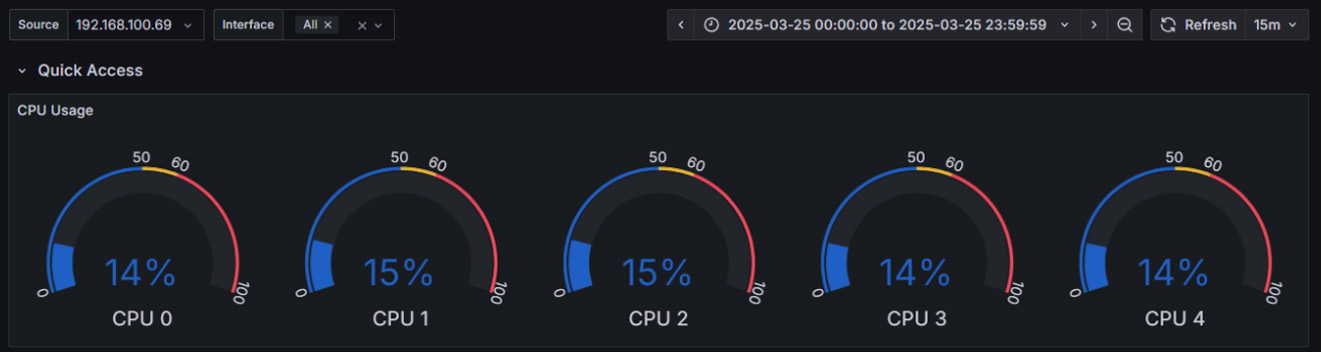
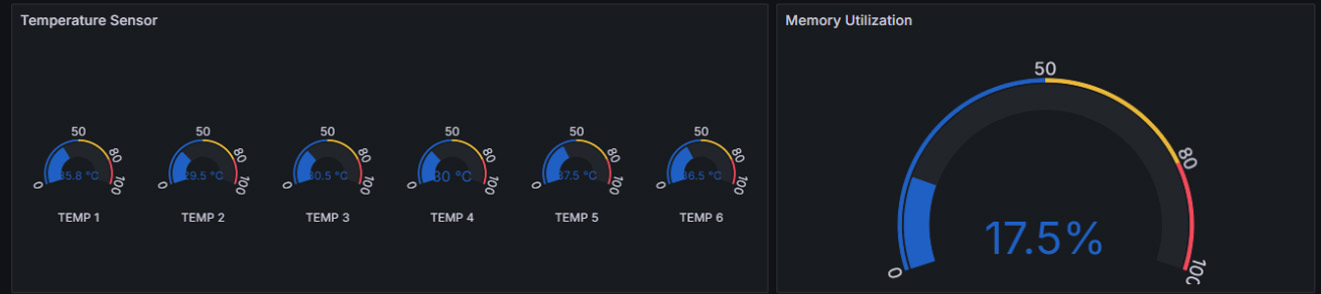
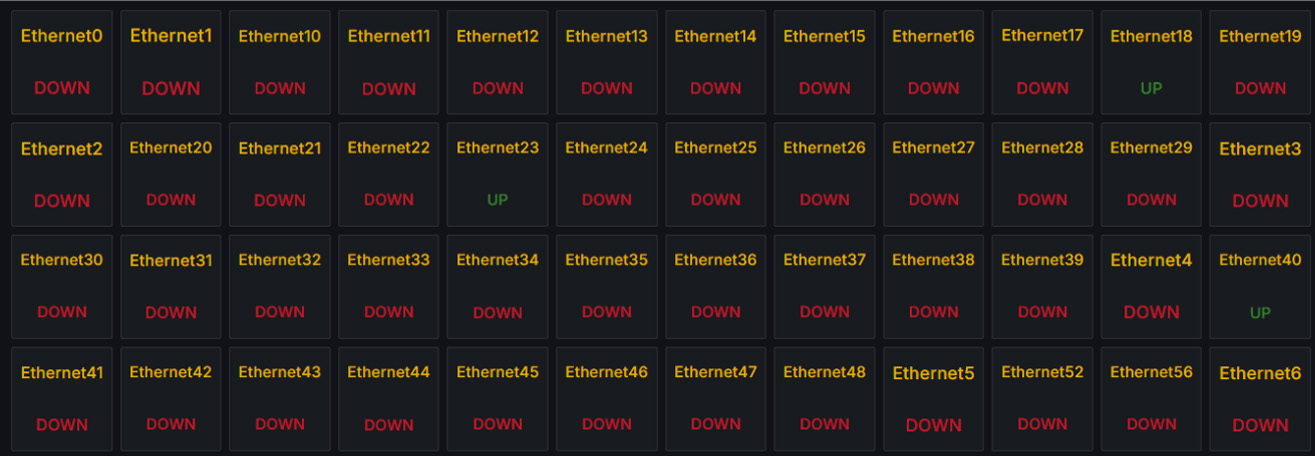
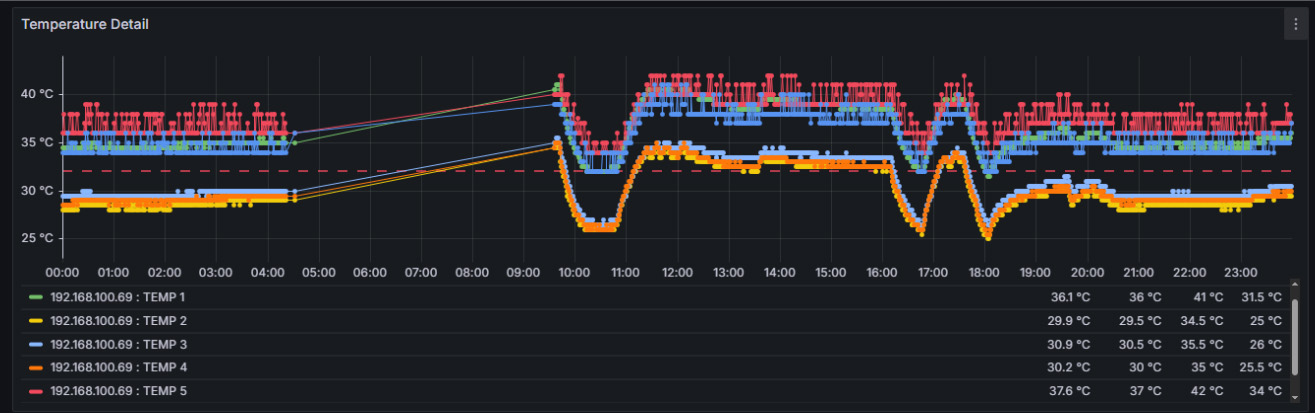
Dashboards

Strategic Takeaway

This observability stack is not just a combination of open-source tools, itโ€™s a production-ready framework engineered for real-time visibility across SONiC environments.

By combining gNMI streaming, Telegraf, InfluxDB, and Grafana, and tuning them specifically for SONiC-based networking, PalC Networks helps organizations monitor infrastructure with precision, scalability, and speed. Weโ€™ve implemented custom telemetry paths, dashboard packs, and threshold-driven alerting systems.

If youโ€™re adopting SONiC and planning to integrate it with a monitoring stack-reach out to us. Our team supports everything from architecture design to implementation, validation, and ongoing maintenance.

Explore Our Open Networking Capabilities

If you need support or guidance in exploring OpenStack, open networking, or data center infrastructure optimization, we are here to help.

Contact us today to learn how PalC Networks can support your journey towards future-ready infrastructure.